



Mozart Piano Concerto no. 4 in G, K41
performed by Philharmonia/Ashkenazy, or below by Perahia/English Chamber Orchestra Maybe I’ve figured out what it is. I would say confident! This piece feels even more confident than the third. I feel better about thinking of that word. Why? Well, think of a composer who changed throughout his career. That shouldn’t be hard. Sibelius comes to mind, for no particular reason. His first two symphonies (taking them as an example) are quite traditional in their Romantic-ness, but then with the third, things change. It’s pared down and almost neo-classical. And then he becomes even more unique, all the way up to … Continue reading Mozart Piano Concerto no. 4 in G, K41
Mozart Piano Concerto no. 3 in D, K40
performed by either Ashkenazy/Philharmonia, or below by Perahia/English Chamber Ochestra Number three. The year is (still) 1767, and our little composer is still eleven years old. Everything is the same, except we get trumpets in addition to keyboard, strings, horns and oboes. Again, three movements, but none of which based on Raupach. Wikipedia says: The first movement is based on the initial movement of Honauer’s Op. 2, No. 1. The second on one by Johann Gottfried Eckard (op. 1, no. 4 ), the most famous keyboardist of his day. The third movement is based on C. P. E. Bach‘s piece … Continue reading Mozart Piano Concerto no. 3 in D, K40

2015/16 Concert Season: Salon Concert
This is apparently an NSO tradition: the salon concert to kick off the season and/or celebrate the release of the program for the upcoming year, and I was thrilled to have been included. The program is below, followed by some thoughts I had during the program, followed by a recap. click here for a readable version I didn’t know much about it before it was mentioned to me, and to be perfectly honest, it seemed like something I wouldn’t be too interested in. I’m not a fan of medleys or performances of excerpts and all that, and this ‘salon concert’ … Continue reading 2015/16 Concert Season: Salon Concert
Mozart Piano Concerto no. 2 in Bb, K39
by Ashkenazy/Philharmonia or below, as usual, by Perahia/English Chamber Orchestra Yesterday’s piece was K37, and this is K39. It seems the young, ambitious, precocious Mozart took a break from his string of piano concertos for his K38. He wrote an opera. At eleven years old. And then he came back to piano concertos, and that’s where we are today. Following the circle of fifths for flats, we come from F major yesterday to Bb major today. This concerto was written only a few months after yesterday’s K37, and uses the same forces. It is a few minutes shorter, and also … Continue reading Mozart Piano Concerto no. 2 in Bb, K39
Mozart Piano Concerto no. 1 in F, K37
performed by The Philharmonia Orchestra under Vladimir Ashkenazy, (or the below with Murray Perahia and the English Chamber Orchestra) As mentioned yesterday, we’re starting a very long stretch of almost-daily posts, with lots of piano works by some very important composers. For future reference, all Mozart concertos will be taken from the above-mentioned Ashkenazy/Philharmonia set. We begin today with the first of five Mozart piano concertos. This one was written when the young composer/pianist was eleven years old. It turns out these works were long considered to be original, but later found to be orchestrations of other German works. A … Continue reading Mozart Piano Concerto no. 1 in F, K37

Much More Mozart
but piano, this time. My previous efforts with Mozart focused solely on his juvenile symphonies, the ones he wrote before he would have even been old enough to get a driver’s license, had that been a thing then. And it … Continue reading Much More Mozart

Buckle up for a month of posts
Take note: get it? Starting today (well, technically yesterday, although that post was unrelated), we will be sharing three series of posts focusing on three very significant composers’ works, all for piano in some form or fashion. Today is July 7, and there will be a post every single day of the month for the rest of the month, culminating with posts on August first and second before we cool back down for weekly music sharing.Most of the pieces are small-ish, which is why I am even considering taking on so much listening and writing. No Mahler symphony-sized stuff, at … Continue reading Buckle up for a month of posts

Leoš Janáček: Sinfonietta
performed by the Vienna Philharmonic under Sir Charles Mackerras 1Q84 I was doing some reading about this piece a number of months ago, trying to decide whether it would take this spot in the blog or not, and one thing led to another, and that secured its spot for today’s post. The other option was something longer and more Alpine, but that will be for later. Plenty of German and Austrian stuff already. I only became familiar with this piece when it was listed on the program for this concert a while back, with Maestro Antoni Wit conducting Eastern European … Continue reading Leoš Janáček: Sinfonietta

Mahler Symphony no. 7
performed by the Chicago symphony under James Levine (this is the performance I’ve been listening to, and it’s a fantastic recording. The below is apparently the same, but some of the tempi [and the audio quality] seem off…..) The above video is … Continue reading Mahler Symphony no. 7

Mahler Thus Far: Part II
In our last Mahler symphony post not all that long ago, we discussed the composer’s smallest and extremely gorgeous fourth symphony. The happy couple…? That piece of the puzzle represented the filling in of a big hole in our … Continue reading Mahler Thus Far: Part II

Opera: L’heure Espagnole
Is it still called a concert if it’s an opera? I have a confession: this is the first opera I’ve ever attended, and one of only a few I’ve ever listened to from beginning to end. To my recollection, aside from L’heure Espagnole yesterday evening, the only operas I’ve ever listened to in their entirety are Wagner’s Das Rheingold (a few times) and Verdi’s La Traviata. That’s it, as far as I know. Anything else would be more like secondhand smoke than real listening. All of that being said, I have more than a few opera friends. While the real … Continue reading Opera: L’heure Espagnole

Brahms Symphony no. 3 in F, op. 90
as performed by the WDR Sinfonieorchester under Gunter Wand “Many music lovers will prefer the titanic force of the First Symphony; others, the untroubled charm of the Second, but the Third strikes me as being artistically the most nearly perfect.” … Continue reading Brahms Symphony no. 3 in F, op. 90

Beethoven’s Eroica: A Litmus
In preparation for another third symphony this week, I thought it would be appropriate to discuss for a bit something that struck me recently. I ran it by a few other friends to see if my idea was just kind … Continue reading Beethoven’s Eroica: A Litmus

Concert Review: Taipei Symphony- Shostakovich and Rachmaninoff
Concerts have become a bit slow-going in the summer. I’m pretty okay with that, though. There are some big ones coming up soon that I need to save up for. But perhaps aside from one or two graduation recitals (which I think were actually in May, so no), this was the first concert of the month of June, and one of perhaps only two. Let’s talk about it. Mr. Gilbert Varga is back in town with our Taipei Symphony Orchestra. Last time I heard them play was under The Great Maestro Eliahu Inbal. What a pleasure, a privilege to see/hear … Continue reading Concert Review: Taipei Symphony- Shostakovich and Rachmaninoff

Bruckner Symphony no. 1 in Cm
performed by The Berlin Philharmonic under Herbert von Karajan (or below in another performance I actually do enjoy [most of] by Georg Solti and the Chicago Symphony. [I say actually because it seems this set doesn’t come up in as … Continue reading Bruckner Symphony no. 1 in Cm
The Bruckner Problem
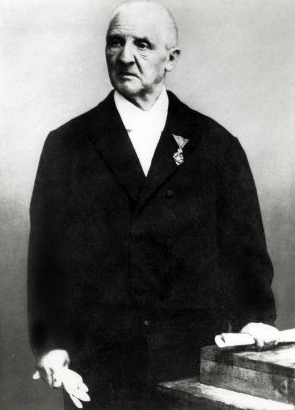
He couldn’t stop himself. Is this the same image I used last time? While Brahms was perhaps compulsive about perfecting something before he published it, agonizing for ages over a work (his first symphony took something like two decades), Bruckner … Continue reading The Bruckner Problem
Schumann Symphony No. 2 in C, op. 61
performed by the Cleveland Symphony under George Szell (I’m writing on Substack now, where I feature pieces on hypothetical concert programs alongside more obscure or underperformed works. This piece was featured in September 2025’s concert program. Go have a look at the … Continue reading Schumann Symphony No. 2 in C, op. 61

Interview: 男高音- 湯發凱
You may have noticed our interview series has dropped off the face of the earth. It happened kind of accidentally. But I got excited about the prospect of a new (small) series of interviews that would be unique for a few reasons. They will be the first interviews of/with people whom I know personally, and They will be the first articles of any kind on the blog in Chinese. I live in Asia, and don’t get much readership in my part of the world. Chinese articles will be cool. So, that’s about all you’ll get in English. It’s been a … Continue reading Interview: 男高音- 湯發凱

Haydn Symphonies 1-5 (and 37)- A wrap up
Well, that’s it for our first chunk of Haydn, and our first week-long spree of posts. We’ll be having some more big weeks like this over the summer, because I’m feeling ambitious. I’ll have more time to listen and write, … Continue reading Haydn Symphonies 1-5 (and 37)- A wrap up
Haydn Symphony no. 5
Horns. The fifth in A major has its date between 1760 and 1762. Wikipedia refers to it as a sonata da chiesa and states that this is the reason for its four-movement form, unlike its cousin the third. It also says that because of the very high horn parts, this is some of the most difficult writing for the instrument in Haydn’s oeuvre. And yes, they are high. As a kite. It’s the most striking thing about the symphony at first listen. In the past, the winds (of any kind) had only gotten much smaller kind of background parts, but this is the … Continue reading Haydn Symphony no. 5
Haydn Symphony no. 4
The fourth in D major takes us back perhaps to 1757 up to 1761, as well as back to a three-movement form. Presto, 6/8 Andante in D minor, 2/4 Tempo di Menuetto, 3/8 The finale is marked as a minuet, but in 3/8 not 3/4 and lacks the typical trio section. The first movement sounds somewhat like the contrapuntal passages that stood out in the third symphony, even if this one may have been written earlier. It’s what jumped out about the first movement. It has a darker second subject, but it’s still all relatively crisp and delightful, but there is really … Continue reading Haydn Symphony no. 4
 Fugue for Thought