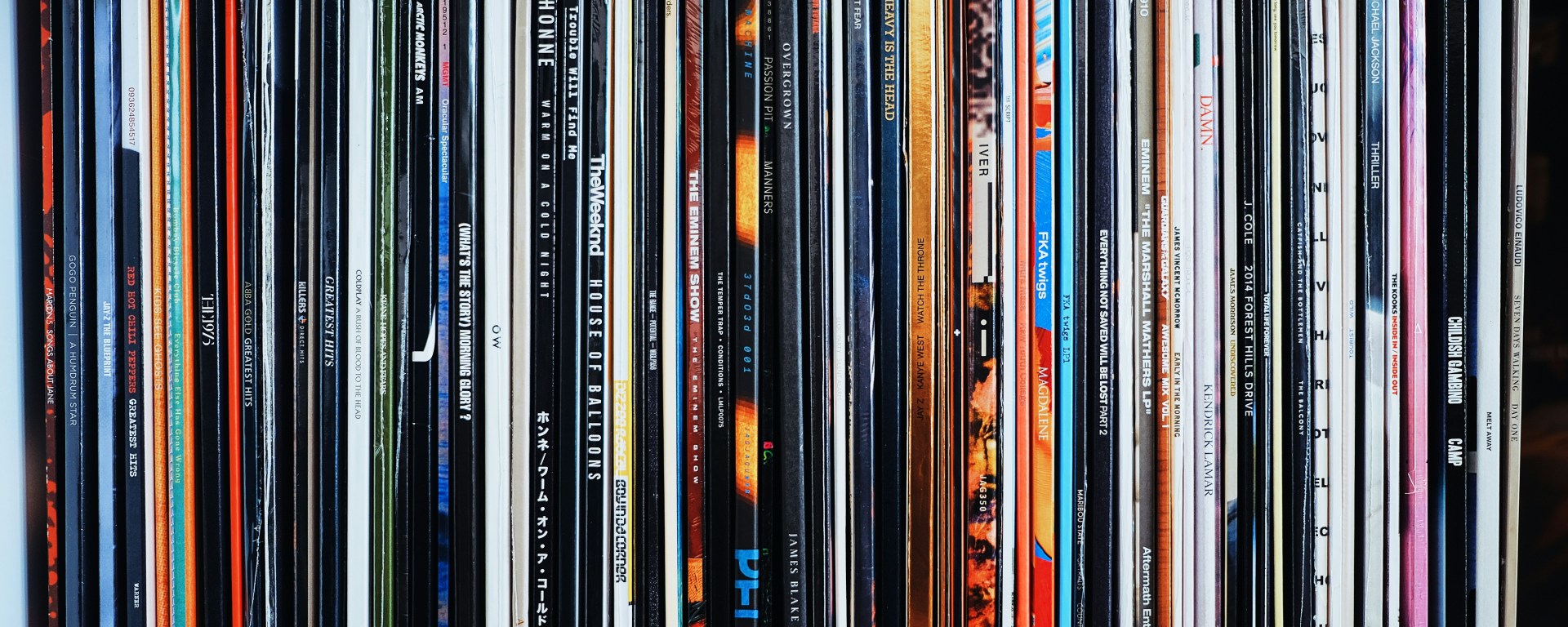
Photo by Samuel Regan-Asante on Unsplash
Everyone knows what a monopoly is.
Everyone also knows that an alliteration can be very nice, and I love to use them.
The opposite of a monopoly (where one seller controls the market) is a monopsony, where one buyer controls the market. An example often given is one customer walking out to a long line of taxis queued up to pick up a fare.
After writing my most recent post, I got to thinking about the difficulty of gaining an audience as a creator of some kind in today’s media-militarized society. And by creator, I don’t mean myself, nor do I mean the composers to whom I try to draw attention, nor the individual conductors or orchestras (or perhaps even, but sometimes actually, the soloists who champion solo or concertante works), but really the record labels. They’re the ones, it seems, who have the greatest attention to the bottom line and are thus making the biggest decisions to improve it. Generally, record labels, at least The Big Ones, are interested in making records that sell. (European record labels like CPO and BIS have like, government funding or grants or wealthy benefactors or something that means they can put money toward wonderful projects that may not be blockbusters but that a small group of people are really truly delighted to see and hear.)
Taking into consideration also the standard “the audience for classical music is shrinking” statement (be it myth or not), what we have is an ever-increasing catalogue of Beethoven recordings, John Williams conducting the Vienna Philharmonic, Dvorak’s New World symphony, another Mendelssohn violin concerto, Elgar cello concerto, etc. etc. and cetera, some of which are delights to have (Boston Symphony doing Shostakovich, or Pittsburg and Honeck doing Bruckner (or just about anything really, all seems great), but my question is what room is there in the general listening audience for something more?
I was recently infuriated by Spotify’s search algorithm or whatever. Using search terms like “Ivanovs quartet” or “Bacewicz symphony” or whatever other obscure composer + form you want to use, ABOVE even what I know are relevant results that match my search terms, I will still get what may as well be labeled ‘sponsored’ results that match NONE of my terms: a new Seong-Jin Cho release, or something from Klaus Mäkelä or Yuja Wang that’s hot and fresh and probably recorded on DG. Again, prioritized over things that actually match my search results.
The audacity of that, of the implied “you should listen to this” or “try this instead”, or alternatively the laziness of offering up what is broadly popular for ‘that kind of music’ rather than what meets search terms is something I can only attribute to either poor search logic or subtle, nefarious ways to pad pockets.
So we have a monopsony, or since there is a small group of listeners (rather tha one individual) with an overabundance of options to choose from at the exclusion of really anything much new, we have an oligopsony.
What casual listener has time, and I ask this cynically because I myself certainly do, for a Frank Bridge sonata over Beethoven or Mozart, or John Ireland’s piano concerto over Rachmaninoff? For Bacewicz or Bortkiewicz over Tchaikovsky or more Rachmaninoff?
None of these questions need be answered, because it’s the same as for books, although without the same ease of access: it’s not shocking or surprising that familiarity with obscure, challenging writers scales with the level of devotion a reader has. If you’ve not read, I don’t know, Ulysses or To the Lighthouse or something from Pynchon or DeLillo, etc., you’re probably not going to be familiar with Barth or Gaddis or Gass or McElroy.
And I guess I don’t feel as sore about that as I do about the music situation because I take that for granted for books. I don’t have any expectation that someone will dedicate hours and hours of their own life to slog through The Sot-Weed Factor or The Instructions, but… listening to different music doesn’t take any more time than it does to listen to music that’s been the poster-child of the genre for centuries.
I’m not calling for any change or expecting that something will be any different, so I guess this amounts to complaining, but boy howdy it’s frustrating to know that your efforts to find certain albums or recordings are hampered by intentionally skewed search results.
 Fugue for Thought
One thought on “The Monopsonistic Music Market?”